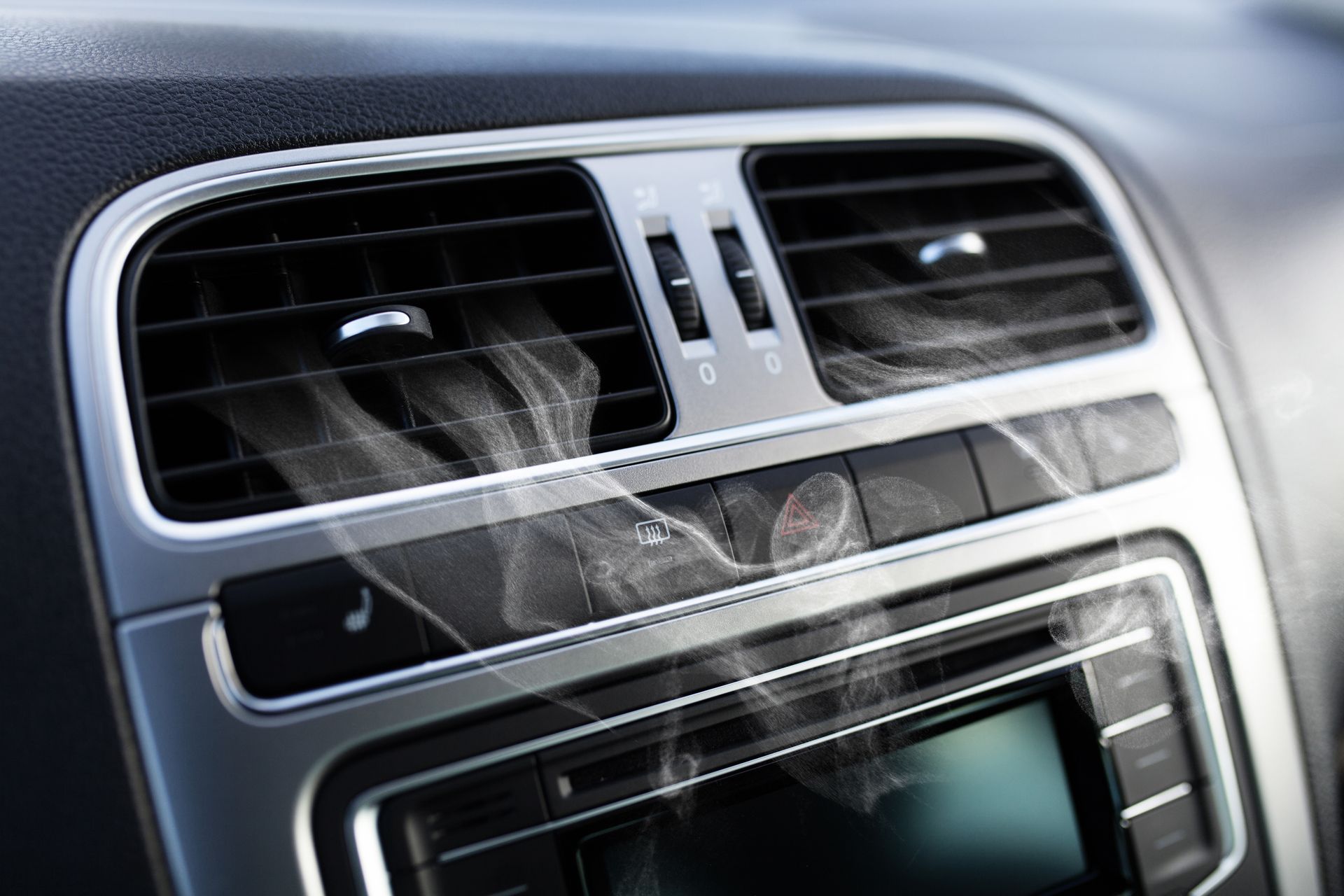
Cold glass and warm, humid air are a tough combination. When your defogger is working right, it clears that fog in a minute or two and keeps the windows transparent while you drive.
If the haze lingers, comes right back, or never really goes away, there is either a settings issue or a problem inside the HVAC system that needs attention.
What Your Defogger Is Actually Doing
The defogger setting is designed to move as much dry, warm air across the glass as possible. When you select defrost or defog, the system directs airflow toward the windshield and usually kicks the A/C compressor on to dry the air. Warm air helps the moisture evaporate, and the A/C side lowers humidity so that fog does not just reappear.
If you have a rear defogger, that part uses electric heating elements embedded in the glass. Those thin lines heat up and help evaporate moisture and light frost. When both front and rear systems are working properly, you should notice a clear path on the glass fairly quickly, not a smeared or patchy view that stays stubborn.
Common Reasons Your Windows Stay Fogged
When a defogger struggles, a few usual suspects show up again and again:
- The system is stuck in recirculating mode, so it keeps pulling moist cabin air across the glass instead of dry outside air.
- The blower fan is weak or only works at certain speeds, so there is not enough airflow to clear the windows.
- The A/C side is not functioning well, which means the air hitting the glass is warm but still humid.
- The engine is slow to warm up, or the thermostat is stuck open, so the heater never gets truly hot.
Any of these can make you feel like the defogger is “on” but not really doing anything useful, especially on cold, wet mornings.
Heater and A/C Settings That Work Against You
Sometimes the defogger problem comes down to how the controls are set. Running the fan on a very low speed, keeping the system on full cold, or leaving the recirculation button on can all make fog worse instead of better. Recirculation is great for quickly cooling a hot car in summer, but in cold weather, it traps moisture from breathing, wet clothes, and snow on the floor.
A better approach is to set the system to defrost or a split setting that favors the windshield, choose warm air, and turn the recirculation off so you are bringing in drier outside air. Many vehicles automatically engage the A/C compressor in defrost mode, which helps dry the air even when you are asking for heat. If you notice your controls behaving oddly or not responding, that is worth mentioning when you bring the car in.
When The Problem Is Inside The HVAC System
If your settings are right and the glass still refuses to clear, a mechanical or electrical issue may be hiding in the dash. Possible causes include a clogged cabin air filter that restricts airflow, a failing blower motor, or a stuck blend or mode door that is not directing air where the controls say it should. On some vehicles, weak A/C performance or low refrigerant charge makes it tough to remove moisture from the air, even though the light on the button is on.
A partially clogged heater core can also make the defogger feel weak. The air is moving, but the coolant is not circulating properly through the core, so the air never gets hot enough to do its job. Our technicians often start the diagnostic by checking airflow at the vents, listening for changes as you move the controls, and feeling the temperature difference as the engine warms up.
Signs Moisture Inside The Cabin Is To Blame
Even a perfectly functioning defogger will struggle if there is too much moisture trapped inside the vehicle. Clues that the problem is more about humidity than hardware include:
- Wet or damp floor mats that never really dry out.
- A musty smell when you first turn the fan on.
- Fog that returns quickly after clearing, especially with multiple passengers.
- Light condensation on side windows, even on short trips.
Moisture can come from snow or rain tracked in on shoes, small water leaks at doors or sunroofs, or even a slow heater core leak. Cleaning up wet spots, using rubber mats, and having any leaks addressed helps give the defogger a fair chance to keep the glass clear.
When A Fogging Issue Becomes A Safety Concern
A little mild fog on a chilly morning is one thing. A windshield that will not clear, or fog that suddenly appears when you hit the brakes or add passengers, is a different story. Reduced visibility at night, in heavy traffic, or on rural roads can make it much easier to miss a pedestrian, a stray animal, or a stopped vehicle. If you find yourself constantly wiping the inside of the glass with your hand or a towel while driving, the problem has crossed from annoyance into safety territory.
At that point, it is smart to treat the defogger concern like any other visibility or braking issue and have it inspected sooner rather than later. We would rather track down a weak blower motor, a clogged cabin filter, or a blend door issue now than after a near miss in traffic.
Get Defogger and Visibility Help in Spartanburg, SC with Advantage AC, Tire & Repair
If your defogger is slow, your windows fog up every time it rains, or the glass never seems truly clear, there is usually a fix behind it. We can inspect your HVAC controls, blower, cabin filter, and heater performance, then track down any hidden moisture or leak problems that are working against you.
Schedule defogger and visibility service in Spartanburg, SC with
Advantage AC, Tire & Repair, and we will help you see the road clearly in every season.